WikiGacha: The Free Wikipedia Card Game Redefining Collectibles
The digital gaming landscape is in a constant state of evolution, with innovation often emerging from unexpected corners. Amidst a sea of high-budget titles and aggressive monetization strategies, a unique, community-driven project has captured global attention: WikiGacha. This unofficial collectible card game (CCG) has taken the internet by storm by transforming the vast, knowledge-rich repository of Wikipedia into millions of tradable digital cards. Far from being just another game, WikiGacha represents a paradigm shift, offering a free-to-play alternative that provides the thrilling experience of "gacha" mechanics without the associated financial risks.
Launched by independent creator Harusugi, WikiGacha has seen unprecedented traffic surges, a clear indicator of a significant appetite for accessible, educational gamification. Its success isn't just about a clever concept; it's about tapping into a fundamental desire for discovery, collection, and knowledge, all within a zero-cost framework. In an era where players are increasingly scrutinizing monetization practices, WikiGacha stands out as a refreshing, fan-led endeavor that prioritizes engagement and intellectual curiosity.
The Genesis of a Phenomenon: WikiGacha's Rise to Prominence
At its core, WikiGacha operates on an elegantly simple yet profoundly addictive premise: it mines the entirety of Wikipedia, turning millions of articles into unique digital trading cards. This ingenious repurposing of encyclopaedic data for entertainment has resonated deeply with players worldwide. Unlike mainstream CCGs that often leverage aggressive monetization strategies to drive revenue, WikiGacha carved its niche by embracing a completely free-to-play model, offering daily packs that allow players to build their collections and develop "battle systems" rooted in real-world knowledge and historical figures.
The project, affectionately dubbed "Wikipedia Gacha" by its burgeoning community, embodies a growing trend of "educational gamification." It brilliantly merges the thrill of discovery with the joy of learning, making the acquisition of knowledge an engaging and competitive experience. The platform's meteoric rise to popularity has, at times, led to technical challenges, with developers noting that the site has been "overwhelmed with traffic." This surge isn't a setback; it's compelling evidence of a significant, underserved demand for accessible gaming experiences that offer the excitement of "gashapon" mechanics—the Japanese vending machine concept—but entirely decoupled from any financial commitment. For a deeper dive into what fueled this rapid ascent, explore Why WikiGacha Surged: Free-to-Play Gacha Without the Cost.
Deconstructing the Gacha: How WikiGacha Subverts the Model
To truly appreciate WikiGacha's innovative approach, it's essential to understand the "gacha" mechanic itself. The term originates from the Japanese "gashapon" machines, where customers insert a coin to receive a random capsule toy. In the modern gaming sector, this concept has evolved into a sophisticated digital economy, often associated with loot boxes, microtransactions, and the probabilistic acquisition of in-game items. High-revenue titles like Gacha Club and various gacha simulators dominate a significant portion of the mobile gaming market, leading to increasing pressure on developers to provide transparency regarding "drop rates"—the mathematical probability of obtaining a specific item.
WikiGacha, however, masterfully subverts this established model. As a fan-led, non-commercial venture, it strips away the financial aspect entirely. Players experience the inherent thrill of the "pull"—the excitement of opening a pack and discovering what rare article might emerge—without any associated cost or risk. This revolutionary approach demonstrates that the core appeal of gacha lies not in its monetization, but in its psychological engagement: the anticipation, the surprise, and the satisfaction of building a collection through chance. By offering this experience for free, WikiGacha has created a powerful antidote to player fatigue concerning aggressive monetization, proving that the joy of discovery can be the ultimate reward.
Building Your Knowledge Arsenal: Gameplay and Strategy in WikiGacha
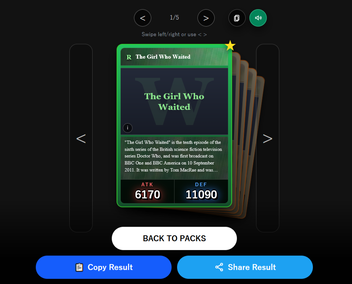
At its core, WikiGacha invites players to embark on an epic quest to turn the world's largest encyclopedia into a personalized deck of collectible trading cards. The sheer scale of the game is staggering, boasting 6,746,498 unique cards corresponding to real Wikipedia articles. With the Common rarity alone comprising 2,795,159 cards, it stands as one of the largest card games ever created, whether physical or digital. This immense variety ensures that every pack opening offers a fresh opportunity for discovery and learning.
Players open packs to discover articles, each transformed into a unique card with specific attributes. Card rarities—ranging from Common, Uncommon, Rare, Super Rare, Super Special Rare, Ultra Rare, to the elusive Legend Rare—are not arbitrarily assigned. Instead, they are determined by an article's automatically evaluated quality and its relative ranking on wikirank.net. This intrinsic link to the source material adds an authentic layer of depth, encouraging players to not just collect, but also to understand the significance of their cards.
Beyond collecting, WikiGacha incorporates automated battles, allowing players to build strategic "battle systems." The attack values of these cards are ingeniously calculated as an article's pageview count multiplied by a rarity factor. This means popular, high-quality articles, especially those with higher rarity, become formidable assets in your collection. To excel, players need to:
- Discover Diverse Articles: A balanced collection includes a mix of well-known, high-pageview articles and rare, high-quality entries.
- Understand Rarity & Stats: Pay attention to the rarity and the underlying quality/rank metrics. These directly influence a card's power.
- Strategic Collection Building: While battles are automated, the strategy lies in curating a collection that can generate strong battle systems. Look for articles with high pageviews and high rarity multipliers.
The experience is not just about hoarding cards; it's about engaging with knowledge in a dynamic, playful way. To explore the mechanics in more detail and get started, check out WikiGacha Explained: Collect Millions of Wikipedia Cards for Free.
Beyond the Cards: The Broader Impact and Community Ethos
The emergence of WikiGacha is not an isolated incident; it's part of a larger trend reflecting a shift in player expectations and community dynamics within the gaming world. Recent data suggests a migration of gaming communities away from traditional, centralized hosting services. Many gacha enthusiasts, for instance, are actively seeking "non-Fandom" wikis to avoid intrusive advertising and to maintain community-driven data integrity and control. This movement aligns perfectly with the core ethos of WikiGacha, which prioritizes accessibility, community engagement, and the pure joy of the game over commercial gain or exploitative practices.
Furthermore, the professional gaming sphere, particularly in European and French markets, has witnessed the rise of advanced simulators for popular titles like the Pokémon TCG Pocket. Players are increasingly adopting an analytical approach, using external tools to calculate odds and practice "pulls" before committing resources in their primary games. While WikiGacha eliminates the financial commitment, its design still taps into this analytical mindset by allowing players to discover and strategize based on real-world data points like article quality and pageviews. It empowers players to become curators of knowledge, making informed decisions about which articles to seek out and how to build their ultimate collection.
This independent project, developed by Harusugi, demonstrates the immense power of individual creators to disrupt established models and foster genuine community. It's a testament to the idea that games can be both entertaining and profoundly educational, transforming mundane data into captivating collectibles. WikiGacha is not just a game; it's a statement about the future of digital content consumption and the enduring appeal of learning in an engaging format.
Conclusion
WikiGacha has proven itself to be far more than a fleeting internet sensation. It stands as a testament to creative innovation, demonstrating that the thrill of discovery and collection doesn't need to come with a price tag. By ingeniously transforming Wikipedia articles into millions of unique, tradable digital cards, it has tapped into a universal human desire for knowledge and novelty, all wrapped in a beloved gacha mechanic. Its free-to-play model, community-centric design, and powerful educational undertones have redefined what's possible in the collectible card game genre. As it continues to navigate its immense popularity and traffic surges, WikiGacha solidifies its position as a groundbreaking project that not only entertains but also subtly educates, inspiring a new generation of players to explore the vast world of information, one card at a time. Its success will undoubtedly influence future independent developers and larger studios alike, proving that genuine engagement and value can truly be the ultimate currency in the digital age.