Why WikiGacha Surged: Free-to-Play Gacha Without the Cost
In the ever-evolving digital landscape, niche gaming projects often capture fleeting attention, but rarely does one ignite global interest and challenge established monetization models quite like WikiGacha. This unofficial collectible card game (CCG), which ingeniously transforms millions of Wikipedia entries into tradable digital assets, has not merely gained traction; it has experienced an explosive surge in popularity, consistently overwhelming its servers with a flood of eager players. The secret to its meteoric rise? WikiGacha offers the intoxicating thrill of gacha mechanics entirely free of charge, presenting a compelling alternative to the often costly world of traditional loot-box gaming.
Launched as a passion project, WikiGacha leverages the vast, open-source repository of Wikipedia to create an unparalleled gaming experience. Players can open daily free packs, collect unique cards representing diverse articles, and build fascinating "battle systems" based on real-world knowledge, historical figures, and obscure facts. This innovative approach, often dubbed "Wikipedia Gacha" or "educational gamification," has tapped into a profound desire among gamers for entertainment that is both engaging and intellectually stimulating, proving that encyclopedic data can indeed be the foundation for an addictive and rewarding game.
The Genesis of a Phenomenon: Unpacking WikiGacha's Core
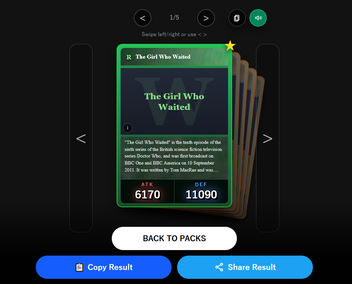
At its heart, WikiGacha operates on a deceptively simple yet profoundly addictive premise: turning the world's largest encyclopedia into a dynamic trading card game. Developed independently by Harusugi, this browser-based CCG offers an astounding 6,746,498 unique cards, each corresponding to a real Wikipedia article. This colossal card pool immediately distinguishes WikiGacha as one of the largest card games ever conceived, dwarfing many professional titles.
The brilliance of WikiGacha lies in its algorithmic generation of card data. Each card's stats and rarity are not arbitrarily assigned but are derived directly from the Wikipedia article it represents. Factors like an article's automatically evaluated quality, its relative ranking on wikirank.net, and even its pageview count contribute to a card's rarity and attack values. The rarity tiers range from Common (comprising nearly 2.8 million cards) to Uncommon, Rare, Super Rare, Super Special Rare, Ultra Rare, and the coveted Legend Rare. This system ensures that every "pull" is not just about a random digital item, but a discovery rooted in actual information, making the act of collecting inherently educational. Players don't just collect cards; they collect knowledge. For a deeper dive into how this revolutionary game redefines digital collectibles, explore WikiGacha: The Free Wikipedia Card Game Redefining Collectibles.
Beyond the Pull: Why Free-to-Play Gacha Resonates So Deeply
The term "gacha" originates from the Japanese "gashapon" vending machines, where a small coin delivers a random capsule toy. In modern digital gaming, this concept has evolved into a sophisticated, often high-revenue model, with players spending significant sums for a chance at rare items. However, the appeal of WikiGacha lies in its bold subversion of this model. It provides all the psychological thrill of the "pull" – the anticipation, the surprise, the joy of discovery – without any of the associated financial risk.
This decoupling of gacha mechanics from aggressive monetization strategies is a game-changer. In an era where many professional game developers face increasing pressure to provide transparency regarding "drop rates" (the mathematical probability of obtaining a specific item), WikiGacha implicitly offers a different kind of transparency: the absolute freedom from monetary cost. Players can indulge their collecting instincts, build their ideal "battle systems," and chase those elusive Legend Rare cards purely for the enjoyment of the game, not under the duress of potential financial loss. The fact that the platform has been "overwhelmed with traffic" is a clear testament to a significant, unfulfilled appetite for cost-free gashapon mechanics.
Furthermore, WikiGacha aligns perfectly with broader trends in the gaming community. There's a noticeable migration away from traditional, ad-heavy hosting services and a growing demand for community-driven platforms that prioritize user experience and data integrity over commercial gain. WikiGacha embodies this ethos, providing an accessible, non-commercial venture that fosters engagement through genuine curiosity and the shared joy of collecting.
Navigating the WikiGacha Universe: Tips for Aspiring Collectors
Embarking on your WikiGacha journey is straightforward, but a few insights can enhance your experience and help you build an impressive collection. Here are some practical tips for new and seasoned players alike:
- Consistency is Key for Daily Packs: The cornerstone of WikiGacha is its generous provision of free daily packs. Make it a habit to log in daily to open your packs. This consistent engagement is the most reliable way to expand your collection and stumble upon those rarer articles without spending a dime.
- Understand Rarity and Value: While every card is a piece of knowledge, some are undeniably more valuable in the game's ecosystem. Familiarize yourself with the rarity tiers – Common, Uncommon, Rare, Super Rare, Super Special Rare, Ultra Rare, and Legend Rare. Higher rarity cards often boast superior stats, making them more potent in automated battles. Observing an article's quality on wikirank.net and its pageview count can give you an immediate hint about its potential rarity before you even pull it.
- Embrace the Educational Aspect: Don't just look at the stats! Take a moment to read the title and perhaps even click through to the actual Wikipedia article. This is where the "educational gamification" truly shines, turning your card collection into a fascinating journey of discovery across diverse topics, from ancient history to cutting-edge science.
- Build Strategic Battle Systems: While battles are automated, understanding how card stats are derived (pageview count multiplied by a rarity factor for attack, for instance) allows for strategic deck building. Try to balance your collection with high-attack cards and those with interesting historical or scientific significance to make your "battle systems" as robust and engaging as possible.
- Engage with the Community: Although WikiGacha is browser-based, a vibrant community of collectors likely exists across various forums and social media. Sharing your pulls, discussing rare finds, and comparing strategies can add another layer of enjoyment to the game. For more details on collecting millions of cards, check out WikiGacha Explained: Collect Millions of Wikipedia Cards for Free.
The Future of Digital Collectibles and Educational Gaming
The unprecedented surge of WikiGacha is more than just a fleeting trend; it represents a significant barometer for the future direction of digital collectibles and educational gaming. Its success emphatically demonstrates that players are increasingly seeking experiences that offer intrinsic value, community engagement, and genuine entertainment, unburdened by aggressive monetization strategies.
This phenomenon aligns with a broader shift where players, particularly in markets like Europe and France in 2026, are becoming more analytical and discerning. The rise of advanced simulators for titles like the Pokémon TCG Pocket, which allow players to calculate odds and practice "pulls" before committing resources in their primary games, underscores this desire for transparency and control. WikiGacha, by offering the thrill of gacha without any monetary commitment, naturally fits into this evolving player mindset, providing an environment where exploration and collection are paramount.
WikiGacha stands as a powerful example of how creative thinking can repurpose existing, open-source data into compelling new forms of entertainment. It challenges traditional notions of game development and monetization, suggesting a vibrant future where educational content can be seamlessly integrated into engaging gameplay, proving that knowledge itself can be the ultimate collectible.
WikiGacha has undeniably captured the global imagination by masterfully blending the addictive mechanics of gacha with the vast, rich tapestry of Wikipedia. Its free-to-play model has not only democratized the thrill of collecting rare digital cards but has also showcased the immense potential of "educational gamification." As players continue to flock to this innovative platform, experiencing the excitement of the pull without the financial burden, WikiGacha stands as a pioneering force, reshaping expectations for digital collectibles and proving that the greatest treasures can indeed be found when knowledge is truly free.