WikiGacha Explained: Collect Millions of Wikipedia Cards for Free
The digital gaming landscape is in constant flux, with new projects emerging that challenge traditional models. Among these,
WikiGacha has rapidly captured global attention, distinguishing itself as a truly innovative and free-to-play collectible card game (CCG). Imagine transforming the entirety of Wikipedia, the world's largest repository of human knowledge, into millions of unique, tradable digital cards. That's the groundbreaking premise behind WikiGacha, an unofficial fan-led venture that offers the thrill of the gacha mechanic without any financial cost, resonating deeply with a growing community seeking accessible and educational entertainment.
This remarkable browser-based game has experienced significant traffic surges, a testament to its compelling blend of encyclopedic data and addictive card-collecting gameplay. As users flock to open free daily packs and build "battle systems" based on real-world knowledge and historical figures, WikiGacha stands out as a beacon of educational gamification, proving that entertainment can be both engaging and enriching. It’s more than just a game; it's a testament to the power of community, knowledge, and an ingenious approach to digital collectibles.
The Genesis of a Phenomenon: What is WikiGacha?
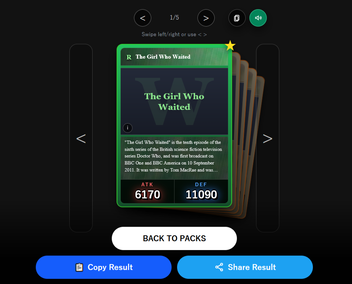
At its core, WikiGacha takes the vast ocean of Wikipedia articles and ingeniously converts each entry into a unique digital trading card. Developed by independent creator Harusugi, the game is a masterclass in repurposing existing data for a novel gaming experience. Players embark on a quest to collect an unprecedented number of cards, with the game boasting an astounding 6,746,498 unique entries. To put that into perspective, the "Common" rarity alone comprises nearly 2.8 million cards, making WikiGacha one of the largest collectible card games ever conceived, whether physical or digital.
The brilliance of WikiGacha lies in its simplicity and accessibility. It's entirely free-to-play, offering daily packs that allow players to consistently expand their collections. Unlike mainstream titles that often rely on aggressive monetization strategies, WikiGacha’s appeal stems from its generous, no-cost approach. Players can build elaborate "battle systems" where the stats of their cards are derived directly from article metrics, adding a layer of strategic depth rooted in real-world data. This innovative concept highlights a growing trend where encyclopedic information is repurposed, not just for learning, but for pure entertainment.
Unpacking Rarity and Strategy in Your WikiGacha Collection
One of the most engaging aspects of any collectible card game is the hunt for rare cards, and WikiGacha delivers on this front with a meticulously designed rarity system. Cards are categorized into seven distinct tiers: Common, Uncommon, Rare, Super Rare, Super Special Rare, Ultra Rare, and the coveted Legend Rare. This tiered system isn't arbitrary; it's intelligently linked to the source material itself.
The rarity of a WikiGacha card is automatically evaluated based on the article's quality and its relative ranking on wikirank.net. This means that an article considered highly significant or well-developed on Wikipedia is more likely to yield a rarer card in WikiGacha. Furthermore, the "Attack" value of each card is dynamically calculated as the article's pageview count multiplied by a specific rarity factor. This ingenious mechanism not only creates a robust in-game economy but also subtly encourages players to explore and learn about various Wikipedia entries, making the act of collecting an inherently educational journey.
Tip for budding collectors: Understanding how rarity and attack values are determined is crucial for strategic gameplay. Pay attention to well-trafficked and highly-ranked Wikipedia articles when considering which cards might bolster your collection's power. The game encourages a deep dive into historical figures, scientific concepts, and cultural phenomena, transforming casual browsing into an exciting quest for discovery.
The Gacha Phenomenon Redefined: Free Thrills, No Spills
The term "gacha" originates from the Japanese "gashapon" vending machines, where a small coin yields a random capsule toy. In the digital age, this concept has evolved into a sophisticated monetization model prevalent in many mobile games, often referred to as loot boxes. However,
WikiGacha champions a radical subversion of this model, offering the addictive thrill of the "pull" without any associated financial risks, making it an ethical and accessible alternative to traditional gacha games.
Understanding Gacha Without the Wallet Strain
Modern gacha games, while immensely popular and revenue-generating, often face scrutiny regarding their monetization tactics and the psychological impact of random rewards. WikiGacha, as a fan-led, non-commercial venture, sidesteps these concerns entirely. It provides the pure excitement of opening a pack and discovering a new, potentially rare card, free from the pressure of spending money. This approach resonates deeply with players who appreciate the core mechanics of gacha—the anticipation, the randomness, the joy of discovery—but are wary of the financial investment often required by other titles like
Gacha Club or various simulators.
The developers of mainstream games are increasingly under pressure to provide transparency regarding "drop rates"—the mathematical probability of obtaining a specific item. WikiGacha, by offering all its content for free, effectively removes this layer of complexity and concern for its players. It’s a pure, unadulterated experience of collecting and exploring, demonstrating a significant appetite for gashapon mechanics when decoupled from financial stakes. This innovative model has been a key factor in
Why WikiGacha Surged: Free-to-Play Gacha Without the Cost, attracting a broad audience tired of aggressive monetization.
Educational Gamification: Learning Through Play
WikiGacha isn't just a game; it's a prime example of "educational gamification," a growing trend where encyclopedic data is cleverly repurposed for entertainment and learning. By transforming Wikipedia articles into collectible cards, the game inherently encourages players to engage with a vast array of topics they might otherwise overlook. Each new card represents a piece of knowledge, a historical event, or a scientific concept, prompting players to read, learn, and expand their understanding of the world.
This approach offers significant benefits:
- Broadens Knowledge: Players inadvertently learn about diverse subjects as they collect cards and explore their attributes.
- Stimulates Curiosity: The unique design and statistical relevance of each card spark an interest in the underlying Wikipedia article.
- Makes Learning Fun: The addictive nature of collecting and battling transforms passive learning into an active, enjoyable pursuit.
WikiGacha successfully bridges the gap between entertainment and education, showcasing how data-rich platforms can be reimagined for engaging and enriching experiences.
Beyond Traditional Gaming: Community, Transparency, and Analytics
The rise of WikiGacha also reflects broader shifts within the digital gaming community, particularly a growing demand for transparency, community-driven platforms, and analytical engagement with game mechanics. Its success is not just about its free-to-play model but also its alignment with these evolving player expectations.
The Shift Towards Community-Driven Platforms
Recent trends indicate a significant migration of gaming communities away from traditional, ad-heavy hosting services like Fandom wikis. Players are increasingly seeking "non-Fandom" wikis and platforms that prioritize community-driven data integrity and a cleaner, ad-free experience. This movement directly aligns with the ethos of
WikiGacha, which, as an independent and non-commercial project, prioritizes accessibility and direct community engagement over profit.
This shift underscores a desire among players for more authentic and user-centric experiences, where the focus remains on the game and its community, rather than intrusive advertising or corporate agendas. WikiGacha’s rapid ascent demonstrates that players value platforms that foster a sense of shared ownership and passion, setting a potential precedent for future indie game development.
The Rise of Analytical Gaming and Simulators
In 2026, the gaming landscape, particularly in European and French markets, shows a marked increase in analytical approaches to gameplay. Players are increasingly using external tools and simulators, such as those seen for the
Pokémon TCG Pocket, to calculate odds, practice "pulls," and strategize before committing resources in their primary games. This methodical, data-driven mindset is becoming standard.
While WikiGacha removes the monetary commitment, the analytical approach to collection and strategy still holds true. Players can observe how rarity is determined by wikirank.net and page views, using this knowledge to appreciate their collection's intrinsic value or even predict the significance of certain articles. This analytical engagement enhances the depth of the game, allowing players to not just collect, but to understand and appreciate the mechanics and the rich data behind their cards.
The Future of Free Collectibles and Educational Gaming
WikiGacha stands as a powerful testament to what innovative game design and a community-first approach can achieve. By transforming the world's largest encyclopedia into millions of collectible cards, it offers an unprecedented scale of content, completely free of charge. Its success is a clear indicator of a burgeoning desire among players for accessible, educational, and ethically designed gaming experiences that prioritize engagement over aggressive monetization.
As WikiGacha continues to navigate its popularity and technical challenges, it paves the way for a future where digital collectibles can be both thrilling and enriching, inspiring players to learn and discover without opening their wallets. It's a game that redefines what a collectible card game can be, proving that the most valuable treasures aren't always bought, but rather, discovered and shared. Embark on your own journey to collect these unique Wikipedia cards and witness firsthand how
WikiGacha: The Free Wikipedia Card Game Redefining Collectibles.